Boutique fitness studios retain approximately 70% of clients annually - meaning 30% leave every year regardless of what you do. The studios that outperform that average invest heavily in the first 30 days of a new client's experience, move clients from drop-in to membership as quickly as possible, build genuine community, and use data to identify at-risk clients before they disappear.
Client retention is the single most leveraged metric in a boutique fitness studio. Acquiring a new client costs time and money - paid ads, word of mouth, intro offers. Keeping a client costs almost nothing by comparison. A studio that retains 80% of its clients annually grows meaningfully year over year from the same client base. One that retains 60% is running to stand still.
Boutique Pilates studios maintain an average annual retention rate of approximately 70%. The studios that outperform this number do specific things differently - and most of them are practical, not particularly complicated.
The retention reality for fitness studios
Before diving into tactics, it helps to be clear about what retention data actually looks like. Most studios see the largest client drop-off in the first 30–60 days - clients who try a few classes and don't come back. After that initial period, clients who have attended regularly for two or three months have dramatically higher retention rates. Getting clients to that threshold is the primary retention challenge.
Revenue from existing clients is fundamentally more valuable than revenue from new clients. A client on a $160/month membership who attends for 18 months generates $2,880 in lifetime value. A client who buys a 5-class pack at $100, doesn't buy another, and disappears generates $100. The math of retention is why the most successful studios are obsessive about the new client experience.
The first 30 days: where retention is won or lost
The first month of a new client's experience is when retention is determined. Research consistently shows that clients who establish a regular attendance habit in the first four weeks - attending at least twice per week - are dramatically more likely to still be clients six months later.
What high-retention studios do in the first 30 days:
- Personal welcome. The instructor or studio owner knows the new client's name from the first class. A simple "good to see you again, Sarah" at the second visit signals that the client is a person, not a transaction.
- Intro offer with a clear next step. Introductory offers (a two-week pass, a first-class discount) work best when they end with an explicit ask to continue - "I'd love to have you join us regularly. Can I set you up with a membership?" rather than letting the intro offer expire silently.
- Early check-in. Some studios send a brief message after a new client's first two or three classes: "How are you finding the classes? Any questions?" This signals that someone noticed they were there.
- Remove friction from rebooking. After a class, the path to booking the next one should be immediate and obvious - "Book your next class" in the confirmation email, or a prompt in the booking app. Don't make clients go looking for it.
Converting drop-ins to members
Drop-ins are not inherently bad - they're an important entry point for new clients. But a client on a membership has made a commitment that a drop-in client hasn't. Members attend more consistently, are less likely to disappear for weeks when life gets busy, and represent more predictable revenue.
The conversion from drop-in to member happens most naturally when:
- The price differential makes membership feel like the obviously smarter choice - if a drop-in is $25 and an 8-class/month membership is $150, the membership breaks even at 6 classes and the client gets 8. The math is clear.
- The invitation is personal and specific. "I've noticed you usually come on Tuesdays and Thursdays - we have a lot of members who attend those days, and a membership would work out to about $19 per class for you" is more effective than a generic "have you considered a membership?"
- The intro offer is designed to convert. An offer that ends with "continue at regular drop-in rates" requires no decision from the client. An offer that ends with "this is a great time to start a membership" prompts one.
Membership removes the decision. When a client is on a monthly membership, the question "should I go to class this week?" has already been answered by a prior commitment. When a client is on drop-ins, they answer that question fresh every week - and sometimes the answer is no. Membership turns yoga or Pilates from a choice into a habit.
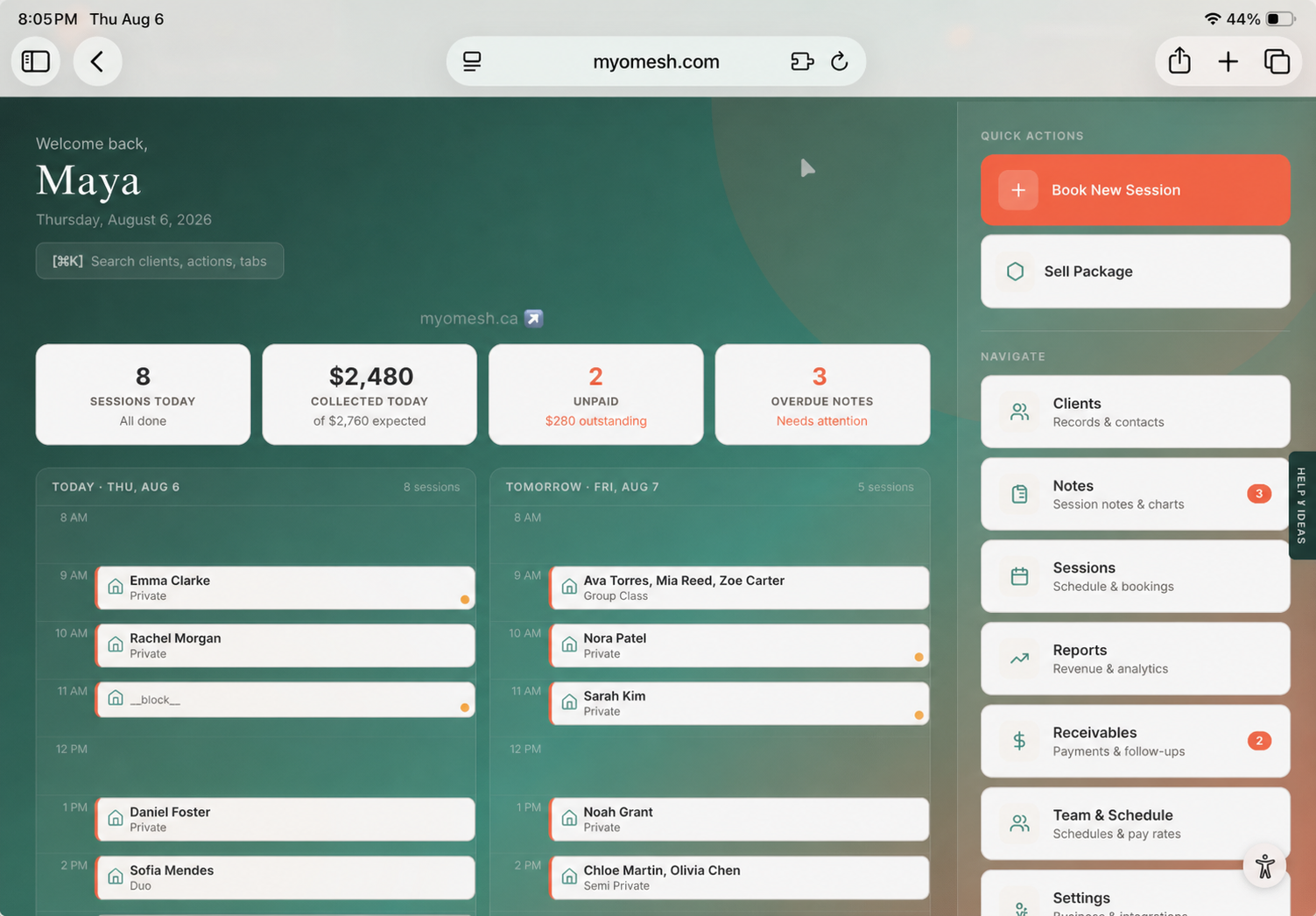
Membership management and retention tools built in
Keep your best clients coming back
with the right tools.
See MyoStudio →
Community: the strongest retention driver
Clients who feel genuinely connected to their instructor and to the other people in their class don't leave for a cheaper option down the street. Community is the moat around a boutique studio that larger gyms and online platforms can't replicate.
Building community isn't complicated, but it requires consistency:
- Instructors know client names and use them
- Long-standing clients are acknowledged - a milestone class, a birthday, a personal goal achieved
- Occasional events outside regular classes - a workshop, a social gathering, a community walk
- Clients see familiar faces in the same time slots - which is partly a scheduling issue (consistent class times build consistent attendance patterns)
The instructor relationship is the most important single factor. Clients are loyal to instructors, not studios. If your studio's best instructor leaves and you haven't built community around the studio itself, clients follow the instructor. Building studio identity - not just instructor identity - is what keeps the community even as the teaching team changes.
Using data to spot at-risk clients
The warning signs of a client about to leave are almost always visible in attendance data before they actually go. A client who normally attends three times a week and drops to once a week for two consecutive weeks is at risk. A client who hasn't booked in 14 days after being a regular weekly attendee is already drifting.
Studio management software that surfaces this data - lapsed attendance reports, declining visit frequency, approaching pack expiry - lets you act before the client disappears rather than after. A simple "we haven't seen you in a while - is everything okay?" message sent at the right moment has a meaningfully higher chance of re-engaging someone than a generic promotional email sent after two months of silence.
Re-engaging clients who've drifted
Clients leave for many reasons - life changes, injury, seasonal schedules, financial pressure. Not all of them are gone permanently, and win-back campaigns are consistently more efficient than new client acquisition.
The most effective win-back approach is personal and low-pressure: a message from the studio or their regular instructor, acknowledging the absence without making it awkward, and offering a simple path back - a "welcome back" class at a reduced rate, or just an invitation to come in any time. The message should feel like it comes from a person, not a marketing automation sequence.
Common questions
Boutique Pilates studios maintain an average annual retention rate of approximately 70%, meaning 30% of clients leave each year. Studios that invest heavily in the first 30 days of a new client's experience, convert drop-ins to members early, and build genuine community typically outperform this average significantly.
Memberships turn attendance from a repeated decision into a standing commitment. A client on a monthly membership has already decided to attend - the question is which class, not whether to go. Drop-in clients make the attendance decision fresh each time, and more frequently answer no when life gets busy. Membership clients attend more consistently, which builds habit and community, which further reinforces retention.
The warning signs are almost always visible in attendance data before a client actually cancels. A regular client whose visit frequency drops significantly over two to three weeks, or who hasn't booked in two or more weeks, is at risk. Studio management software that surfaces lapsed attendance data lets you reach out while there's still something to save - rather than after they've gone.
Retention tools built into
your studio software.
MyoStudio includes membership management, attendance tracking, and the follow-up tools that help Canadian studio owners keep their best clients coming back.
See MyoStudio See it live - 20 min with Rob